Introduction: What You Need to Know
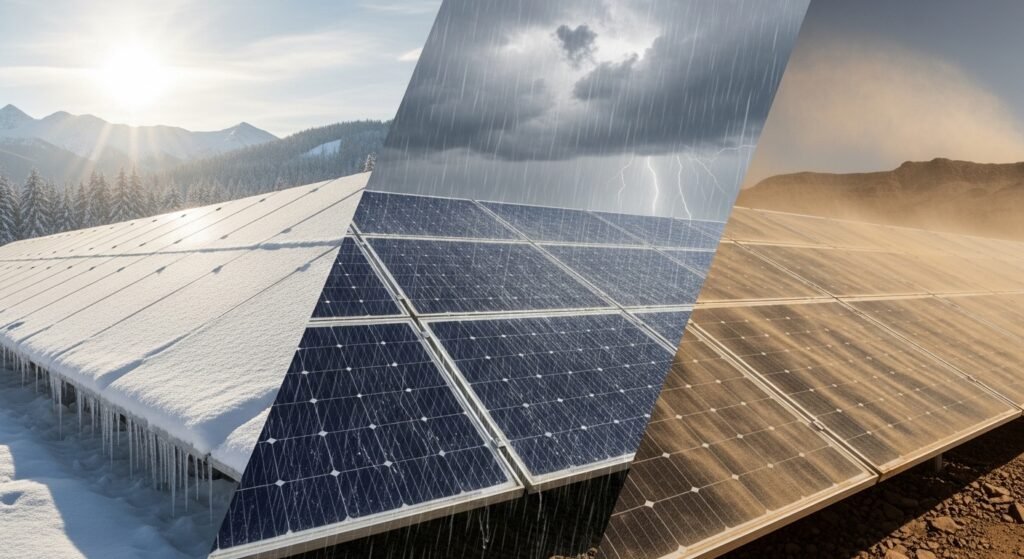
Solar energy is one of the most reliable and sustainable power sources available today. However, like any outdoor technology, solar panels are influenced by weather conditions. Understanding how different weather elements affect solar panel performance can help you maximize efficiency and make informed decisions.
1. Sunny Days: Peak Performance
It’s no surprise that solar panels perform best under direct sunlight. On clear, sunny days, panels generate maximum electricity as they receive uninterrupted solar radiation. This is when your solar system operates at its highest efficiency.
However, extremely high temperatures can slightly reduce efficiency. While sunlight is essential, excessive heat can decrease the electrical output of solar panels.
2. Cloudy Weather: Reduced but Not Zero Output
Solar panels still work on cloudy days, but their efficiency drops. Clouds block and scatter sunlight, reducing the amount of solar energy reaching the panels. Depending on cloud density, energy production may decrease by 10% to 75%.
Despite this, modern solar panels are designed to capture diffused sunlight, ensuring continued energy generation even in overcast conditions.
3. Rainy Season: Natural Cleaning Advantage
Rain might reduce sunlight temporarily, but it comes with a benefit—it cleans your panels. Dust, dirt, and debris are washed away, improving efficiency once the sun returns.
In regions with frequent rainfall, this natural cleaning can help maintain long-term performance without frequent manual maintenance.
4. Snow: Temporary Obstruction
In colder climates, snow can block sunlight if it accumulates on panels. This temporarily reduces energy production. However, most solar panels are installed at an angle, allowing snow to slide off easily.
Additionally, sunlight reflecting off snow can sometimes enhance energy generation once the panels are clear.
Weather Impact on Solar Panels: A Complete Guide for Homeowners
Solar panels are built to withstand outdoor conditions, but weather still plays a key role in their performance. Whether it’s intense heat, heavy rain, or dust storms, each condition affects how much energy your system can generate.Solar panels rely on sunlight to produce electricity. Any environmental factor that affects sunlight exposure—such as clouds, dust, or seasonal changes—directly impacts energy output.
Understanding these factors helps you:
- Predict energy generation
- Plan maintenance
- Improve long-term efficiency
Impact of Temperature on Solar Panels
Many people assume hotter weather means better performance—but that’s not entirely true.
- Solar panels work best in moderate temperatures
- High heat can reduce voltage output
- Efficiency may drop slightly during peak summer afternoons
Ideal conditions: Bright sunlight with cool temperatures
Do Solar Panels Work During Monsoon and Cloudy Days?
Yes, solar panels continue to generate electricity even when the sky is cloudy.
- Diffused sunlight still reaches panels
- Output may drop but does not stop
- Advanced panels perform better in low-light conditions
This makes solar energy a reliable option even during monsoon seasons.
Rainfall: A Hidden Benefit for Solar Systems
Rain is often seen as a disadvantage, but it actually helps maintain efficiency.
Benefits of Rain:
- Removes dust and dirt buildup
- Reduces need for manual cleaning
- Improves performance after rainfall
After a good rain, your panels often perform better than before.
Dust, Pollution & Their Long-Term Effects
In many parts of India, dust and pollution are major concerns.
Key Impacts:
- Blocks sunlight from reaching cells
- Gradually reduces efficiency
- Can cause uneven performance across panels
Solution:
Regular cleaning and scheduled maintenance are essential to keep your system running efficiently.
Wind and Storm Protection
Wind can be both helpful and harmful.
Positive Effects:
- Cools panels, improving efficiency
- Prevents overheating
Risks:
- Strong storms may damage weak installations
- Loose mounting structures can be dangerous
Professional installation ensures your system is weather-resistant.
Seasonal Changes and Solar Output
Solar energy production varies throughout the year.
Summer:
- High sunlight availability
- Slight efficiency drop due to heat
Monsoon:
- Lower production due to clouds
- Cleaning benefit from rain
Winter:
- Better efficiency due to cooler temperatures
- Shorter daylight hours
Smart Tips to Handle Weather Impact
To get the best results from your solar system:
Clean panels every few weeks (especially in dusty areas)
Install panels at the correct tilt angle
Use high-quality mounting structures
Monitor system performance regularly
Schedule professional maintenance checks
Myth vs Reality
Myth: Solar panels don’t work in bad weather
Reality: They work in all weather, just at different efficiency levels
Myth: Heat increases output
Reality: Excess heat actually reduces efficiency
Future Technology: Weather-Resistant Solar Panels
Modern solar technology is improving rapidly:
- Anti-reflective coatings for better light absorption
- Self-cleaning panel surfaces
- Higher efficiency in low-light conditions
These advancements make solar energy more reliable than ever.
Final Thoughts
Weather does influence solar panel performance, but it doesn’t stop it. With proper installation, regular maintenance, and quality equipment, your solar system can generate consistent energy throughout the year.
At RVK Solar, we ensure your system is designed to perform in every season—helping you save energy and reduce electricity costs no matter the weather.
Why Choosing the Right Partner Matters
A poorly installed system can reduce efficiency and increase costs.
A trusted provider ensures:
- Proper design
- Maximum ROI
- Long-term reliability
visit: https://rvksolar.com
Search on Google:
https://www.google.com/search?q=rvksolar.com
Complete Advertising Agency delivers tailored solar solutions designed for business growth.
FAQs
1.Do solar panels work during cloudy or rainy days?
Yes, solar panels still generate electricity in cloudy or rainy weather. However, their efficiency is reduced because less sunlight reaches the panels.
2.Can solar panels withstand strong winds and storms?
Yes, properly installed solar panels are designed to withstand strong winds and harsh weather conditions. Professional installation is key to durability.
3. Do solar panels stop working in winter?
No, solar panels continue to work in winter. In fact, cooler temperatures can improve efficiency, although shorter daylight hours may reduce total energy production.
4.What is the best weather for solar panel performance?
Sunny days with moderate temperatures and clear skies provide the best conditions for maximum energy generation.
5. How often should solar panels be cleaned?
It depends on your location, but generally cleaning every 2–4 weeks in dusty regions is recommended to maintain efficiency.
Conclusion:
Weather conditions do influence the performance of solar panels, but they do not stop energy production. From sunny days to cloudy skies and even rainy seasons, solar systems are designed to operate efficiently in a wide range of environments.
By understanding how different weather conditions affect your system and following proper maintenance practices, you can ensure consistent and reliable energy output throughout the year.
At RVK Solar, we focus on delivering high-quality solar solutions that are built to perform in all weather conditions—helping you maximize savings and move towards a greener, more sustainable future.