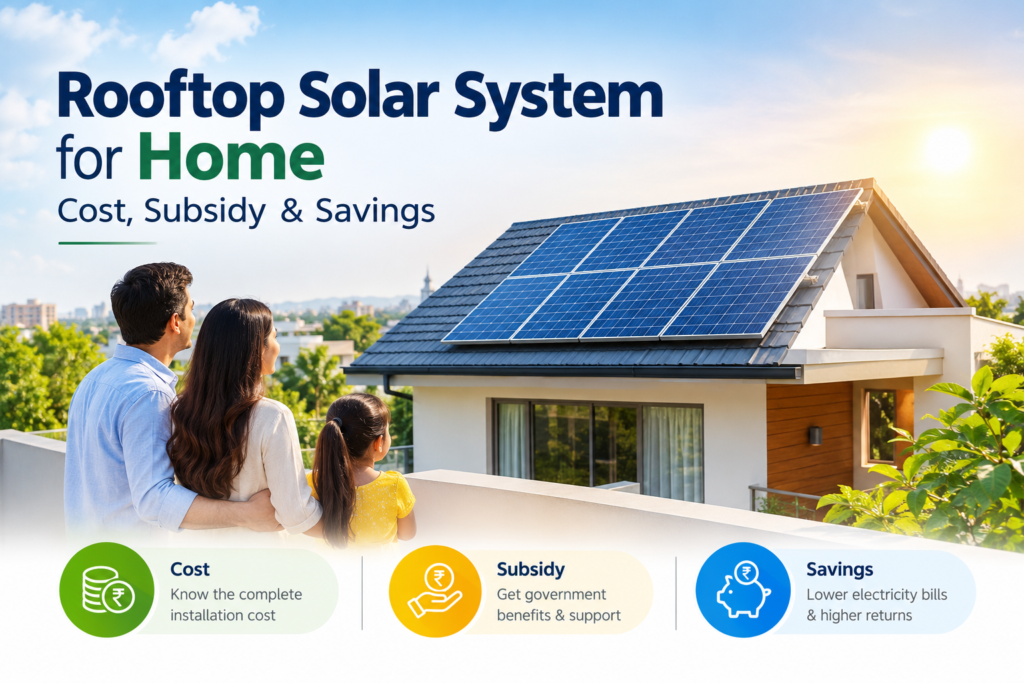
Why Rooftop Solar Makes Sense for Indian Homes in 2026
Electricity bills in India have been on a steady climb for years, and most households now feel it every month. Rooftop solar has moved from a niche upgrade to one of the most reliable ways to bring that cost down while adding long-term value to a home. Here is what makes it worth considering in 2026.
Rising Electricity Costs Are Here to Stay
Grid tariffs are revised periodically across most states, and fuel and transmission costs continue to push them upward. A solar system locks in a large part of your energy cost at today’s installation price, protecting you from future tariff hikes for the next 25 years or more.
What Rooftop Solar Actually Saves You
A well-sized residential system can offset a large share of daytime electricity consumption, and with net metering, any surplus power you generate is exported to the grid and credited against your bill. Over a typical 25-year panel lifespan, the savings usually run into several lakhs of rupees, depending on system size, local tariffs, and how much sunlight your roof receives.
Government Support: The PM Surya Ghar Muft Bijli Yojana
The central government’s PM Surya Ghar: Muft Bijli Yojana significantly lowers the upfront cost of residential rooftop solar. The subsidy is structured by system size:
- Up to 2 kW: ₹30,000 per kW of central subsidy
- 2–3 kW: an additional ₹18,000 for the third kW
- 3 kW and above: subsidy capped at ₹78,000
The subsidy is credited directly to your bank account after your DISCOM inspects and commissions the system, and several states add their own top-up incentives on top of the central amount. Eligible households can also see their electricity bills drop toward zero, with any additional units of self-generated power adding to the savings.
Beyond Money: Energy Independence and Environmental Impact
A rooftop system reduces your dependence on grid supply and shields you from load-shedding and price volatility. It also cuts your household’s carbon footprint meaningfully—a typical residential system offsets several tonnes of CO₂ emissions every year over its lifetime, equivalent to planting dozens of trees annually.
Is Your Roof Solar-Ready?
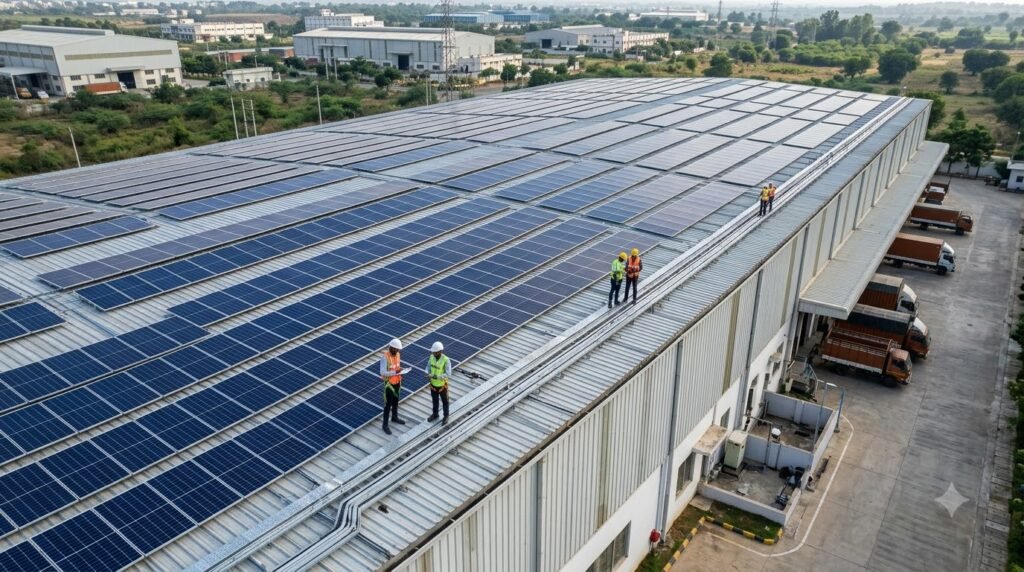
Most Indian rooftops — flat concrete slabs or sloped sheet roofs — can support a solar installation with the right mounting structure. What matters most is unobstructed sun exposure through the day, roof orientation, and structural strength. A site assessment is the only reliable way to know your roof’s real potential, including shading from nearby buildings or trees.
Ready to See What Solar Can Save You?
RVK Solar offers a free consultation and site assessment for homeowners across residential, commercial, and industrial properties. Our team will walk you through system sizing, subsidy eligibility, and expected savings before you commit to anything.
Call us: +91 98273 73375 | Email: rvksolar@gmail.com
Yes, every installation project begins with a free consultation and site assessment.
Timelines depend on the size and type of project, and are shared clearly after the site assessment.
6. What happens after the system is installed?
Every system goes through rigorous testing and commissioning, and we provide ongoing maintenance support afterward
Contact RVK Solar
Address: H.no.1, Semar Wali Gali, Mill Road, Ganj Basoda, Dist: Vidisha (M.P.) – 464221
Phone: +91 98273 73375
Email: rvksolar@gmail.com
Website: rvksolar.com
you can find our website on Google