Two Ways to Power Your Property, One Clear Winner Over Time
Solar Power vs Grid Electricity: Upfront Cost vs. Long-Term Savings
Breaking Down the Real Cost Difference
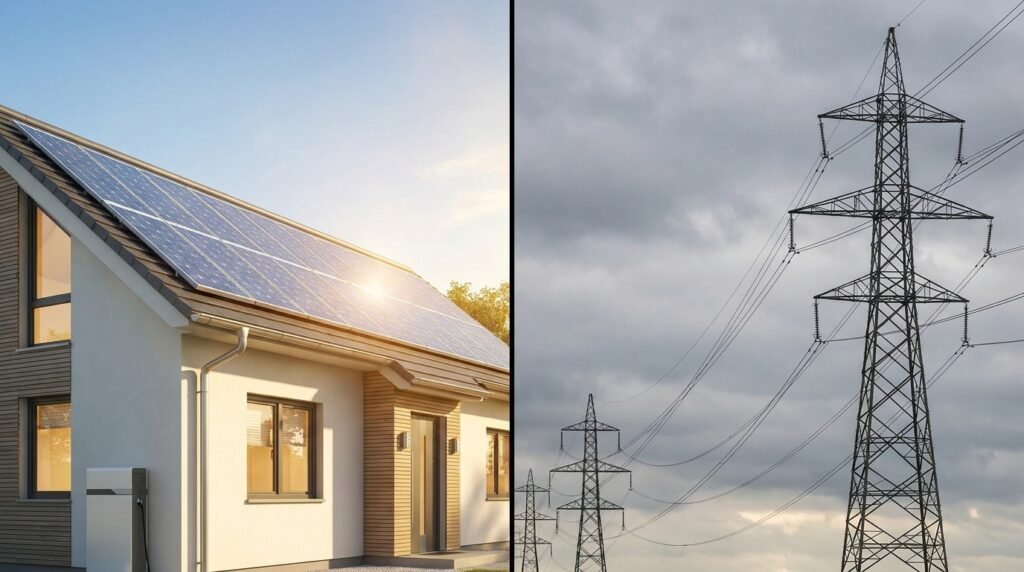
To truly compare solar power vs grid electricity, it helps to think in terms of total cost of ownership rather than just the monthly bill. Grid electricity has no upfront cost but an ever-rising ongoing cost with no ceiling. Solar has a defined upfront cost, followed by a sharply reduced ongoing cost that stays relatively stable for the life of the system. Plotted over 20-25 years, the total cost of a grid-only approach almost always exceeds the total cost of a solar installation with occasional grid backup — the exact crossover point simply depends on your local tariffs and system size. You can check current renewable energy policies affecting this comparison on the Ministry of New and Renewable Energy’s official website.
Where Solar Pulls Ahead
- Tariff Protection – Once installed, your solar system isn’t affected by grid tariff hikes the way a traditional connection is, insulating your budget from rate increases you can’t control.
- Return on Investment – Most homeowners and businesses recover their solar investment within a few years, after which the electricity generated is essentially free.
- Reduced Grid Dependency – Less reliance on the grid means fewer disruptions from power cuts, especially with battery backup options.
- Environmental Value – Solar power produces clean energy with no ongoing emissions, unlike grid electricity, which is often generated from fossil fuels.
- Asset Value – A solar installation adds tangible value to a property, something a grid connection alone does not provide.
Where Grid Power Still Has a Role
In the solar power vs grid electricity mix, grid electricity remains useful as a backup source, Grid electricity remains useful as a backup source, particularly on days with lower sunlight or for properties where solar generation doesn’t fully cover peak demand. Many RVK Solar customers use a hybrid approach — solar as the primary source, with grid power as a reliable backup for nighttime use or periods of unusually high consumption. This hybrid model often delivers the best balance of cost savings and reliability, without requiring an oversized (and more expensive) solar system designed to cover 100% of consumption independently.
Factors That Influence Your Specific Savings
Not every property will see identical results when comparing solar power vs grid electricity. Local sunlight hours and weather patterns affect how much energy your system generates. Your existing consumption pattern — how much power you use and when — determines how much of your bill solar can realistically offset. Available roof or ground space limits maximum system size, and local electricity tariffs determine how much each unit of avoided grid consumption is actually worth. A proper site assessment accounts for all of these variables rather than relying on generic estimates.
Making the Right Choice for Your Property
The right decision depends on your energy consumption, available roof or ground space, local sunlight availability, and long-term plans for the property. A detailed consultation helps determine exactly how much you could save by switching to solar, and over what timeframe, rather than relying on rough industry averages that may not reflect your actual situation.
Why Property Owners Choose RVK Solar for This Transition
Switching from full grid dependency to solar isn’t just about installing panels — it’s about designing a system that’s correctly sized for your actual consumption, so you get maximum savings without overspending. RVK Solar’s consultation and design process is built around that principle, ensuring every customer gets a system that matches their real energy needs and delivers genuine long-term value, backed by ongoing maintenance to protect that value for years to come.
FAQs:
1. Is solar power really cheaper than grid electricity in the long run?
Yes, while solar requires an upfront investment, the electricity generated afterward costs far less than continuing to pay ever-rising grid tariffs over the system’s 25+ year lifespan.
2. Can I completely disconnect from the grid after installing solar?
It’s possible with the right system size and battery storage, though many customers prefer staying grid-connected as a backup for cloudy days or higher-than-usual consumption.
3. In the solar power vs grid electricity debate, how long does it take to recover the cost of a solar installation?
Payback periods vary based on system size, energy consumption, and local tariffs, but many homeowners and businesses recover their investment within a few years.
4. Does solar power work without battery storage?
Yes, solar systems can operate without batteries by feeding excess power to the grid or simply offsetting daytime consumption, though batteries add backup capability during outages.
5. How do I know if solar makes financial sense for my property in the solar power vs grid electricity comparison?
A site consultation evaluating your energy consumption, roof space, and local sunlight conditions will show you the projected savings and payback timeline specific to your property.