Introduction:
What Is a Smart Inverter?
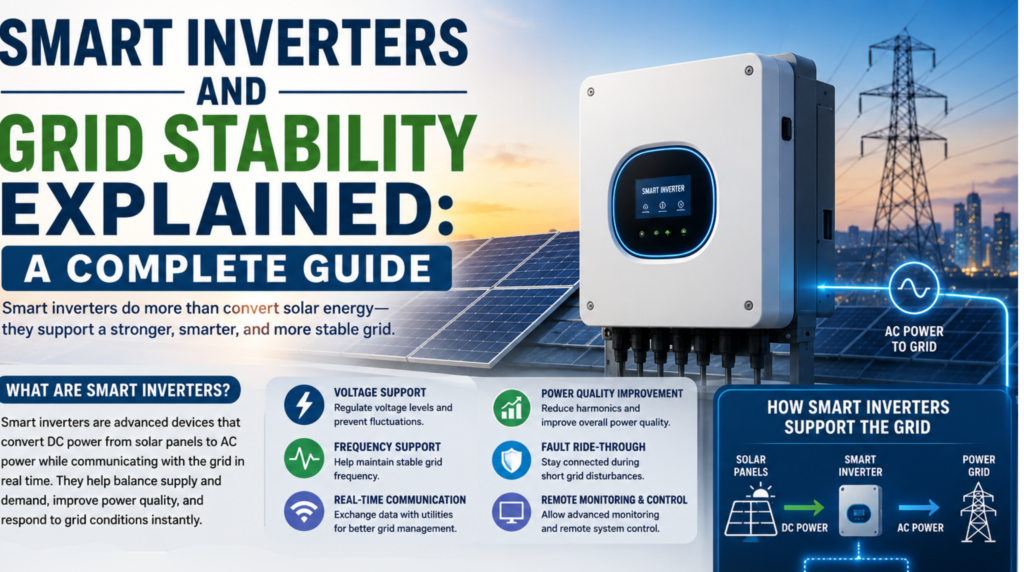
A smart inverter is an advanced electronic device that converts the direct current (DC) electricity generated by solar panels into alternating current (AC) electricity while providing intelligent grid support functions. Unlike traditional inverters, which mainly focus on energy conversion, smart inverters continuously monitor electrical conditions and automatically adjust their operation to maintain safe and efficient power delivery.
These inverters are equipped with communication capabilities that allow them to interact with utility companies, energy management systems, and other connected devices. By responding quickly to changes in voltage, frequency, and power demand, smart inverters play an important role in improving the stability and reliability of modern electricity networks.
Their intelligent control features make them an essential component of today’s renewable energy systems, especially as solar energy becomes a larger part of the global electricity supply.
Understanding Grid Stability
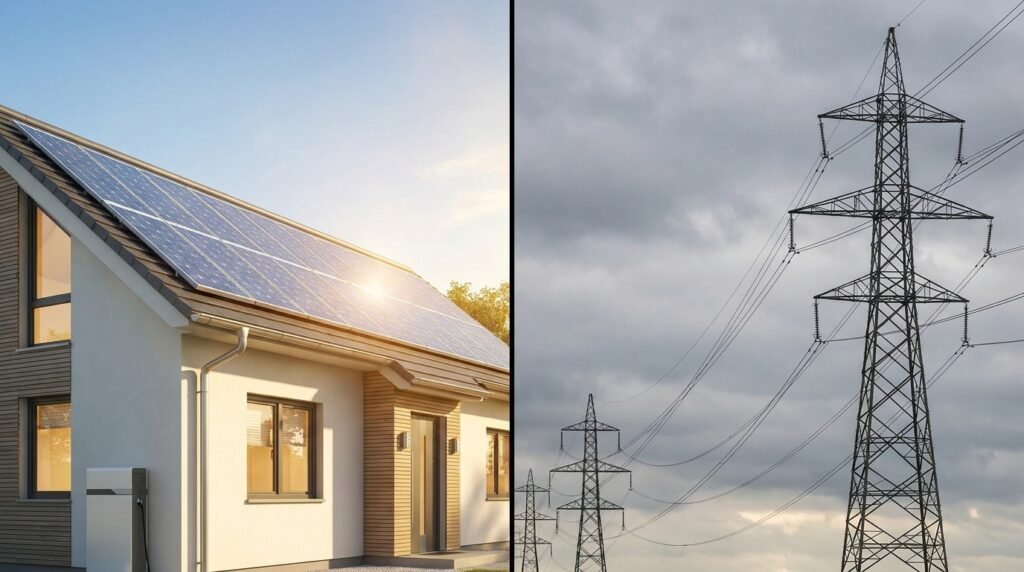
Grid stability refers to the ability of the electrical power system to maintain a continuous balance between electricity generation and electricity consumption. A stable grid ensures that voltage and frequency remain within acceptable limits, allowing electrical equipment to operate safely and efficiently.
In traditional power systems, large centralized power plants were responsible for maintaining this balance. However, the increasing number of distributed renewable energy systems, such as rooftop solar installations, introduces greater variability into electricity generation. Since solar energy production depends on sunlight, output can change due to weather conditions, cloud cover, or seasonal variations.
Maintaining grid stability under these changing conditions requires advanced technologies capable of responding quickly to fluctuations. Smart inverters provide exactly this capability by supporting the electrical grid whenever operating conditions change.
Why Smart Inverters Are Important for Modern Power Grids
The growing adoption of renewable energy has significantly changed how electricity networks operate. Modern power grids require greater flexibility, faster response times, and better coordination between electricity producers and consumers.
Smart inverters help achieve these objectives by acting as intelligent control systems within solar installations. Instead of operating independently, they continuously monitor grid conditions and adjust their output to support overall system stability. Their ability to communicate with utility operators allows power systems to become more adaptive, reliable, and efficient.
As renewable energy penetration continues to increase, smart inverters are becoming essential for ensuring that clean energy sources integrate smoothly into existing electrical infrastructure without compromising grid performance.
Why Every Home Requires a Customized Solar Solution
No two homes consume electricity in exactly the same way. Even houses with similar floor areas can have completely different energy requirements depending on the number of occupants, appliance usage, and daily routines.
Some households use electricity primarily during the daytime, while others experience higher consumption during evenings and weekends. Commercial establishments have even more diverse energy demands depending on business operations and working hours.
Because of these differences, professional solar system design focuses on creating a customized solution rather than offering a one-size-fits-all package. Customized planning ensures that the solar installation delivers the best possible performance while maximizing energy savings and investment returns.
The Importance of Choosing High-Quality Solar Panels
Not all solar panels offer the same level of performance. Modern solar technology continues to improve, providing homeowners with highly efficient panels capable of generating greater electricity from the same amount of sunlight.
Premium-quality solar panels typically provide better durability, higher efficiency, and longer warranties. They also perform more consistently under changing weather conditions, making them a smart long-term investment.
Choosing quality components not only improves energy production but also reduces maintenance requirements and enhances the overall reliability of the solar power system.
Key Features of Smart Inverters
Modern smart inverters include several advanced capabilities that distinguish them from conventional inverters.
One important feature is real-time communication, allowing utilities and energy management systems to monitor and control inverter performance remotely. This enables faster response to changing grid conditions and simplifies system maintenance.
Smart inverters also include advanced voltage regulation functions that help maintain stable electricity delivery even when renewable energy generation fluctuates.
Many models offer remote software updates, allowing manufacturers to introduce new features and improve performance without replacing hardware.
Built-in monitoring systems provide detailed information about energy production, system health, and operational efficiency, helping owners detect issues before they become major problems.
These intelligent capabilities contribute to safer, more reliable, and more efficient solar power systems.
Benefits of Smart Inverters
Smart inverters provide significant advantages for homeowners, businesses, utility companies, and the overall electricity grid.
They improve system reliability by maintaining stable voltage and frequency levels during varying operating conditions. This reduces the likelihood of power interruptions and improves the quality of electricity supplied to connected equipment.
Smart inverters also enhance renewable energy integration by enabling solar systems to operate harmoniously alongside conventional power generation. Their intelligent control capabilities support higher levels of renewable energy without compromising grid performance.
For solar system owners, smart inverters offer greater visibility into system operation through advanced monitoring platforms. Real-time performance data helps maximize energy production while simplifying maintenance and troubleshooting.
Their communication capabilities also prepare solar installations for future smart grid technologies, ensuring long-term compatibility with evolving utility requirements.
Smart Inverters and Renewable Energy Integration
Smart inverters provide significant advantages for homeowners, businesses, utility companies, and the overall electricity grid.
They improve system reliability by maintaining stable voltage and frequency levels during varying operating conditions. This reduces the likelihood of power interruptions and improves the quality of electricity supplied to connected equipment.
Smart inverters also enhance renewable energy integration by enabling solar systems to operate harmoniously alongside conventional power generation. Their intelligent control capabilities support higher levels of renewable energy without compromising grid performance.
For solar system owners, smart inverters offer greater visibility into system operation through advanced monitoring platforms. Real-time performance data helps maximize energy production while simplifying maintenance and troubleshooting.
Their communication capabilities also prepare solar installations for future smart grid technologies, ensuring long-term compatibility with evolving utility requirements.
Applications of Smart Inverters
Smart inverters are widely used across residential, commercial, and industrial solar installations.
Homeowners benefit from improved energy efficiency, enhanced monitoring, and greater compatibility with battery storage systems.
Commercial facilities use smart inverters to optimize energy consumption, reduce electricity costs, and improve operational reliability.
Industrial installations rely on smart inverter technology to support large-scale renewable energy generation while maintaining stable electrical performance across complex facilities.
Utility-scale solar farms also depend heavily on advanced inverter technologies to meet modern grid connection standards and provide essential support services to electricity networks.
The Future of Smart Inverter Technology
The future of solar energy is closely connected with the continued development of smart inverter technology. As artificial intelligence, cloud computing, and Internet of Things (IoT) technologies advance, smart inverters are expected to become even more intelligent and autonomous.
Future systems may automatically optimize energy consumption based on electricity prices, weather forecasts, and household demand patterns. Improved communication between solar systems, battery storage, electric vehicles, and utility operators will create highly efficient smart energy ecosystems.
These innovations will contribute to more resilient electrical grids while accelerating the global transition toward renewable energy.
Why Choose RVK Solar?
At RVK Solar, we believe that high-quality solar systems require equally advanced inverter technology. We provide intelligent solar solutions designed to maximize energy production, improve system reliability, and ensure long-term performance.
Our experienced team carefully evaluates every project before recommending the most suitable inverter and solar system configuration. We use premium-quality products, professional installation practices, and ongoing technical support to help customers achieve maximum value from their investment.
Whether you are planning a residential rooftop installation or a commercial solar project, RVK Solar offers customized renewable energy solutions that combine efficiency, innovation, and reliability.
Visit our website at https://rvksolar.com/ to learn more about our services. You can also search “RVK Solar” onGoogle to explore our latest projects, customer reviews, and expert solar solutions.
Conclusion
As the world moves toward cleaner and more sustainable energy sources, smart inverters have become one of the most important technologies supporting the future of modern electricity networks. They do far more than convert solar power into usable electricity—they actively enhance grid stability, improve power quality, enable better renewable energy integration, and prepare electrical systems for the demands of tomorrow’s smart grids. Investing in a solar system equipped with advanced smart inverter technology provides long-term benefits for homeowners, businesses, utility providers, and the environment. From improved efficiency and real-time monitoring to enhanced reliability and future-ready communication capabilities, smart inverters are transforming the way solar energy interacts with the power grid.
At RVK Solar, we are committed to delivering innovative solar solutions that combine high-performance solar panels with advanced smart inverter technology. Our customized systems are designed to maximize energy savings, improve reliability, and support a cleaner energy future.
FAQs:
1. What is a smart inverter?
A smart inverter is an advanced solar inverter that converts DC electricity into AC electricity while providing intelligent grid support functions such as voltage regulation, frequency control, and remote communication.
2. How do smart inverters improve grid stability?
Smart inverters automatically respond to changes in grid voltage and frequency, helping maintain a stable and reliable electricity supply while supporting renewable energy integration.
3. Are smart inverters better than traditional inverters?
Yes. Smart inverters offer advanced monitoring, communication, grid support, and energy management features that significantly improve system performance and reliability.
4. Can smart inverters work with battery storage systems?
Yes. Many smart inverters are compatible with battery energy storage systems, allowing homeowners and businesses to store excess solar energy for later use.
5. Why are utilities encouraging smart inverter adoption?
Utilities recognize that smart inverters help maintain grid stability, improve renewable energy integration, reduce operational challenges, and support future smart grid technologies.