Introduction:
What Is Electrical Protection in Solar Power Plants?
Electrical protection in solar power plants refers to the collection of devices, systems, and engineering practices designed to detect abnormal electrical conditions and protect equipment from damage. These protective measures ensure that electrical faults are identified immediately and isolated before they affect the entire power generation system.
A solar power plant continuously generates electricity whenever sunlight is available. Since electrical energy flows through numerous components before reaching the utility grid or electrical loads, every section of the system must remain protected against unexpected events such as short circuits, overloads, insulation failures, earth faults, voltage fluctuations, and lightning surges.
The primary objective of electrical protection is not only to safeguard expensive equipment but also to protect human life, maintain uninterrupted power generation, and ensure compliance with electrical safety regulations.
Why Electrical Protection Is Important in Solar Power Plants
Electrical protection forms the foundation of a safe and reliable solar installation. Solar power plants represent a significant financial investment, and protecting that investment requires comprehensive electrical safety measures throughout the system.
Proper protection minimizes equipment failures, reduces maintenance costs, and improves the overall reliability of electricity generation. It also prevents dangerous operating conditions that may result in electrical fires, electric shocks, or extensive system damage.
For commercial and utility-scale solar projects, reliable protection systems are essential for maintaining contractual power generation commitments and minimizing production losses caused by unexpected electrical failures.
As renewable energy continues to expand worldwide, utilities increasingly require advanced protection systems before approving grid-connected solar installations.
Common Electrical Faults in Solar Power Plants
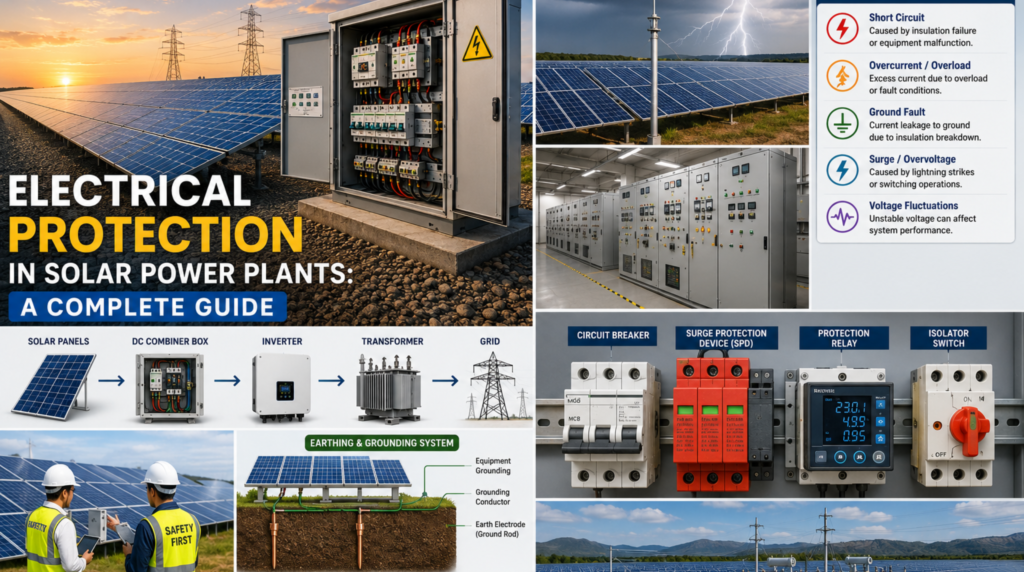
Solar power plants are exposed to various electrical disturbances throughout their operational lifetime. Understanding these faults helps engineers design effective protection systems capable of minimizing equipment damage. Short circuits occur when electrical conductors accidentally come into contact, allowing excessive current to flow through the system. These faults can severely damage solar equipment if not interrupted immediately. Ground faults happen when electrical current unintentionally flows to earth due to damaged insulation or cable failures. Ground faults present serious safety risks and require rapid detection to prevent electric shock hazards. Overcurrent conditions may result from equipment malfunction, wiring errors, or external electrical disturbances. Excessive current generates heat that can damage cables, connectors, and electrical devices. Overvoltage conditions frequently occur during lightning strikes or switching operations. These sudden voltage surges can destroy sensitive electronic equipment, including solar inverters and monitoring systems. Voltage fluctuations and frequency variations originating from the utility grid can also affect solar plant performance if appropriate protective measures are not installed.
Key Components of Electrical Protection in Solar Power Plants
Effective electrical protection depends on several specialized devices working together to detect faults and isolate affected sections of the system. Circuit breakers provide automatic interruption of electrical current whenever abnormal conditions occur. They protect electrical equipment by disconnecting faulty circuits before severe damage develops. Fuses serve as sacrificial protection devices that interrupt excessive current by melting their internal conductor when predetermined current limits are exceeded. Surge Protection Devices (SPDs) safeguard sensitive equipment against transient voltage spikes caused by lightning strikes and switching events. They are essential for protecting solar inverters, monitoring systems, and communication equipment. Protection relays continuously monitor electrical parameters such as voltage, current, frequency, and power quality. When abnormal operating conditions are detected, relays send commands to circuit breakers, isolating faulty equipment from the rest of the solar plant.
The Role of Earthing and Grounding
A properly designed earthing system is one of the most important safety features in any solar installation. Earthing provides a low-resistance path that safely directs fault currents into the ground, reducing the risk of electric shock and equipment damage.
Grounding also stabilizes system voltage and improves protection device performance during electrical faults. In lightning-prone regions, an effective grounding system significantly reduces the impact of lightning-induced surges on electrical equipment.
Regular inspection and maintenance of grounding systems are necessary to ensure long-term reliability and compliance with electrical safety standards.
Lightning Protection in Solar Power Plants
Solar power plants are often installed in open locations where they are directly exposed to lightning activity. Lightning strikes can generate extremely high voltages capable of damaging solar panels, inverters, transformers, monitoring equipment, and communication systems. Lightning protection systems include air terminals, down conductors, grounding networks, and surge protection devices that safely divert lightning energy away from critical equipment. Installing comprehensive lightning protection significantly improves plant reliability while reducing expensive equipment replacement costs.
Benefits of Proper Electrical Protection
A comprehensive electrical protection system offers numerous operational, financial, and safety benefits.
It improves equipment lifespan by preventing damage caused by electrical faults and voltage surges. Reliable protection also minimizes costly repairs, reduces maintenance requirements, and increases overall plant availability.
From a safety perspective, electrical protection safeguards personnel working on or near energized equipment while reducing the likelihood of electrical fires and hazardous operating conditions.
Well-protected solar power plants deliver greater energy reliability, improved investment returns, and enhanced customer confidence.
Best Practices for Electrical Protection in Solar Power Plants
Successful electrical protection begins with proper engineering and system design. Every solar installation should undergo detailed electrical studies before construction to identify potential fault conditions and select appropriate protection equipment. Using high-quality certified components significantly improves long-term reliability. Protection settings should be carefully coordinated to ensure that only affected equipment disconnects during faults while the remainder of the system continues operating. Routine inspection, preventive maintenance, thermal imaging, insulation testing, and performance monitoring help maintain protection system effectiveness throughout the plant’s operational life. Keeping maintenance personnel properly trained and following national electrical standards further strengthens overall plant safety.
Why Choose RVK Solar?
At RVK Solar, we understand that electrical safety is just as important as energy generation. Every solar power plant we design incorporates advanced electrical protection systems that meet industry standards and ensure safe, reliable operation. Our experienced engineering team carefully evaluates each project to design customized protection solutions based on site conditions, system capacity, and utility requirements. From residential rooftop systems to large commercial installations, we prioritize safety, performance, and long-term reliability. Our services include professional system design, quality equipment selection, expert installation, testing, commissioning, and ongoing technical support to ensure your solar investment remains protected throughout its operational life.
Visit our official website at https://rvksolar.com/ to learn more about our solar engineering solutions. You can also search “RVK Solar” on Google to explore our projects, customer reviews, and comprehensive renewable energy services.
Conclusion
Electrical protection is one of the most important elements of any successful solar power plant. From safeguarding solar panels and inverters to protecting transformers, switchgear, and personnel, a properly designed protection system ensures reliable energy production while minimizing operational risks. As solar installations continue to grow in size and complexity, investing in high-quality electrical protection is essential for maintaining efficiency, preventing costly failures, and complying with modern safety standards.
Whether you are installing a residential rooftop system or developing a large commercial solar project, comprehensive protection planning should always be part of the design process. Choosing experienced professionals ensures that every component of your solar power plant is protected against electrical faults, environmental hazards, and unexpected operating conditions.
At RVK Solar, we combine technical expertise, quality equipment, and industry best practices to deliver safe, efficient, and reliable solar energy solutions. Our commitment to engineering excellence ensures that your solar investment remains protected for decades.
FAQs:
1. What is electrical protection in a solar power plant?
Electrical protection is a system of devices and safety measures designed to detect electrical faults and protect solar equipment from damage while ensuring safe system operation.
2. Why is surge protection necessary in solar installations?
Surge protection devices protect sensitive electrical equipment from high-voltage spikes caused by lightning strikes, switching operations, and other transient events.
3. How does grounding improve solar system safety?
Grounding safely directs fault currents into the earth, reducing electric shock risks, stabilizing voltage, and improving the effectiveness of protection devices.
4. What equipment is commonly used for electrical protection?
Common protection equipment includes circuit breakers, fuses, surge protection devices, protection relays, grounding systems, isolator switches, and monitoring systems.
5. How often should protection systems be inspected?
Protection systems should be inspected regularly according to manufacturer recommendations, industry standards, and preventive maintenance schedules to ensure reliable performance.