Introduction:
Why Solar Energy is Ideal for Warehouses
Warehouses and logistics hubs consume massive amounts of electricity for lighting, HVAC systems, machinery, and automation technologies. Traditional power sources often lead to fluctuating energy costs, which directly impact profitability.
Key Reasons to Switch:
- Large rooftop areas perfect for solar panel installation
- High daytime energy usage aligns with solar production
- Rising electricity costs affecting operational budgets
- Increasing pressure for eco-friendly business practices
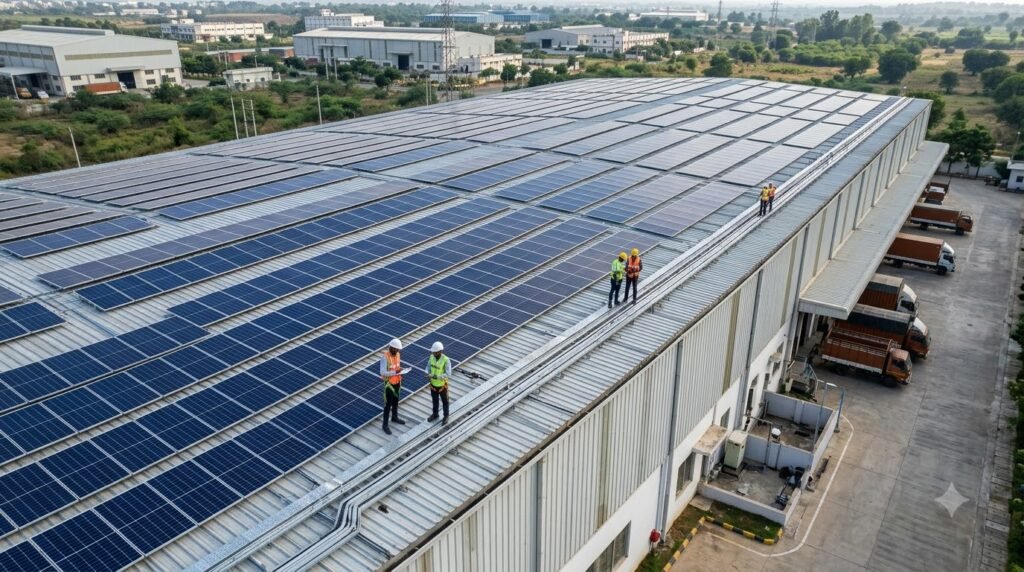
By adopting solar energy for warehouse and logistics centers, businesses can transform unused roof space into a revenue-saving asset.
Our Advantage – RVK Solar
At RVK Solar, we conduct detailed site analysis and design systems that maximize energy output based on your warehouse size, energy consumption, and location—ensuring optimal ROI.
Benefits of Solar Energy for Warehouse and Logistics Centers
1. Significant Cost Savings
Electricity is one of the largest operational expenses in logistics. Solar energy can reduce power bills by up to 70%.
Key Savings Benefits:
- Lower monthly electricity expenses
- Protection from rising utility rates
- Attractive return on investment
- Government incentives and tax benefits
Rvk solar provide customized financing options and ROI projections so you clearly understand your savings before installation.
2. Sustainability and Brand Value
Modern businesses are expected to adopt eco-friendly practices. Solar power reduces carbon emissions and helps companies meet ESG (Environmental, Social, Governance) goals.
Sustainability Impact:
- Reduced carbon footprint
- Clean and renewable energy source
- Compliance with environmental regulations
- Improved brand reputation
Rvk solar help businesses showcase their green transition with performance reports and sustainability metrics that enhance brand credibility.
3. Energy Independence
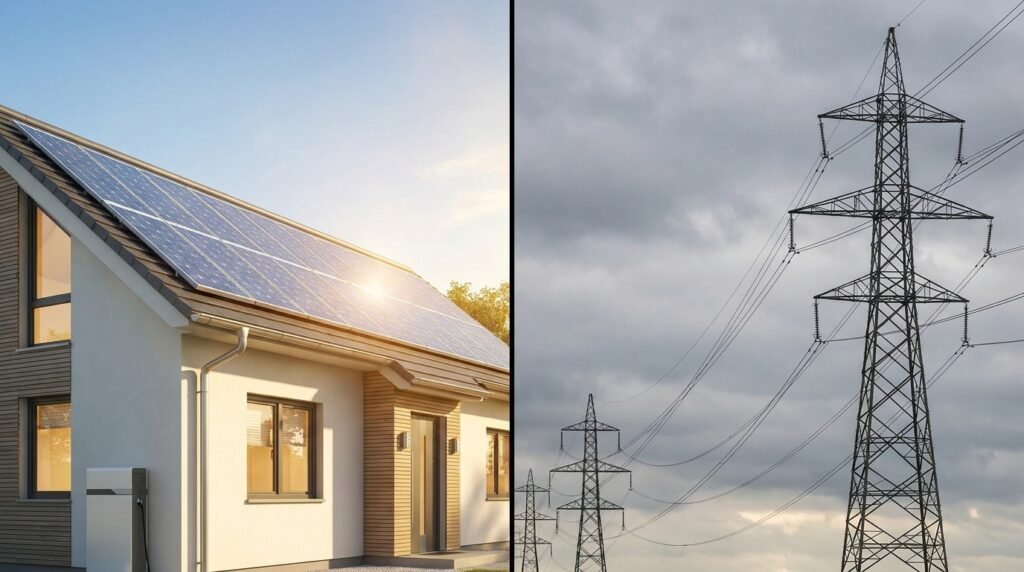
Power outages and grid fluctuations can disrupt warehouse operations. Solar systems, especially when paired with battery storage, ensure uninterrupted power supply.
Advantages Include:
- Reliable energy during peak hours
- Reduced dependency on grid electricity
- Business continuity during outages
Rvk solar advanced solar systems are designed for reliability, with optional battery integration for uninterrupted operations.
4. Efficient Use of Idle Space
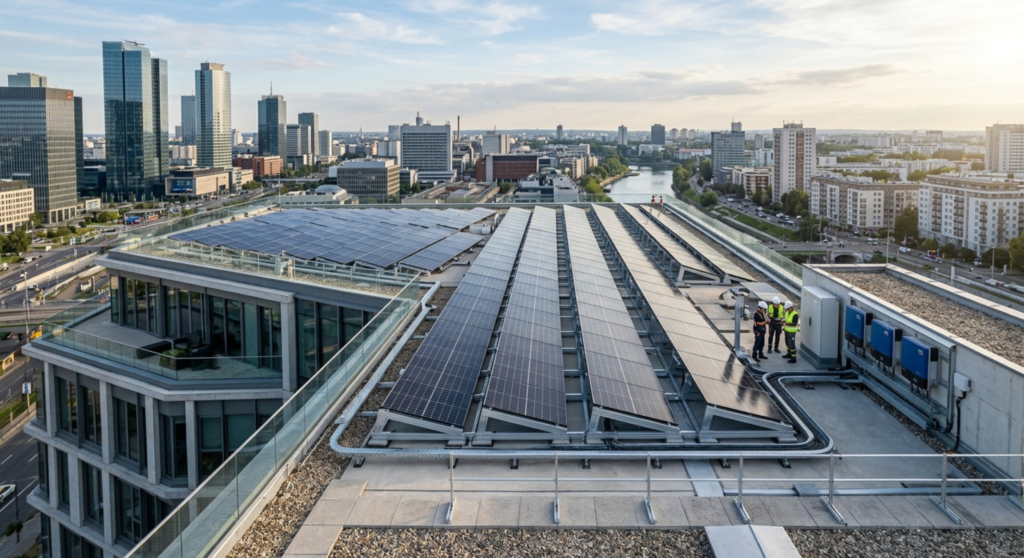
Warehouse rooftops often remain unused. Installing solar panels turns that idle space into a productive asset.
Benefits of Rooftop Solar:
- No additional land required
- Maximizes existing infrastructure
- Low maintenance requirements
Rvk solar design lightweight, durable solar installations that suit industrial rooftops without affecting structural integrity.
How Solar Energy Works in Logistics Centers
Solar panels capture sunlight and convert it into electricity using photovoltaic (PV) cells. This electricity is then used to power warehouse operations.
Simple Process:
- Solar panels absorb sunlight
- Inverter converts DC to usable AC power
- Electricity powers warehouse equipment
- Excess energy can be stored or exported
This seamless process makes solar energy for warehouse and logistics centers both efficient and easy to manage.
Rvk solar provide end-to-end solutions—from design and installation to monitoring and maintenance—so you can focus on your core operations.
Key Considerations Before Installing Solar
Before switching to solar, businesses should evaluate a few critical factors:
Important Factors:
- Roof size and structure
- Energy consumption patterns
- Budget and financing options
- Local regulations and incentives
Checklist for Decision Making:
- Conduct energy audit
- Evaluate ROI timeline
- Choose a reliable solar provider
- Plan for scalability
Our expert team handles feasibility studies, compliance, and installation, ensuring a smooth transition without operational disruptions.
RVK Solar partners with trusted manufacturers and selects high-performance solar panels that deliver reliable energy production for decades.
Why Warehouses and Logistics Centers Are Ideal for Solar Energy
Warehouses and logistics centers are uniquely suited for solar power installations due to their expansive roof areas and consistent daytime energy consumption. Unlike many commercial buildings that have complex roof structures or limited installation space, warehouses typically feature large, flat rooftops that can accommodate extensive solar panel systems. These vast roof surfaces often remain underutilized despite receiving abundant sunlight throughout the year. By installing solar panels, facility owners can convert these unused spaces into productive assets that generate clean electricity for decades.
The energy requirements of logistics operations align exceptionally well with solar energy production. Warehouses consume substantial amounts of electricity for lighting systems, conveyor belts, automated storage and retrieval systems, refrigeration equipment, loading docks, ventilation systems, security infrastructure, and office operations. Since many of these activities occur during daylight hours, solar energy can directly offset a significant portion of electricity consumption when energy demand is at its highest. This synchronization between solar generation and facility operations maximizes energy savings and improves the overall return on investment.
The Growing Need for Sustainable Logistics Operations
The logistics industry is experiencing increasing pressure from customers, investors, and regulatory bodies to adopt sustainable business practices. Major retailers, manufacturers, and e-commerce companies are actively seeking logistics partners that demonstrate environmental responsibility and carbon reduction initiatives. Implementing solar energy solutions allows warehouse operators to significantly reduce their carbon footprint while showcasing their commitment to sustainability. This can strengthen relationships with environmentally conscious clients and enhance a company’s reputation within competitive markets.
Furthermore, sustainability initiatives are no longer viewed solely as environmental responsibilities. They have become strategic business advantages that influence customer decisions, investor confidence, and long-term operational planning. Solar energy enables warehouse operators to achieve measurable environmental goals while simultaneously reducing operating costs. This dual benefit makes solar one of the most impactful investments available for logistics facilities seeking both financial and environmental returns.
Significant Cost Savings Through Solar Energy
Electricity expenses represent a major portion of warehouse operating costs, particularly for facilities operating around the clock or managing temperature-sensitive products. Solar energy systems provide a reliable method for reducing dependence on utility providers and protecting businesses from fluctuating electricity rates. Once installed, solar panels generate electricity from sunlight without fuel costs, allowing facility owners to produce a substantial percentage of their power requirements on-site.
Over the lifespan of a commercial solar system, warehouses can realize significant savings on electricity bills. These savings often increase over time as utility rates continue to rise. Businesses that invest in solar energy gain greater control over their energy expenditures, making budgeting and financial forecasting more predictable. In many cases, solar installations pay for themselves within a few years, after which the generated electricity effectively becomes a source of long-term operational savings.
At RVK Solar, we conduct detailed energy assessments to identify the optimal system size and design for each facility. Our customized approach ensures that warehouse operators maximize energy production, improve financial performance, and achieve the highest possible return on investment.
Enhancing Energy Security and Business Continuity
Energy reliability is critical for warehouses and logistics centers where even brief power disruptions can affect inventory management, order fulfillment, automated systems, and customer service operations. Solar energy systems can be integrated with battery storage solutions to provide additional energy security during grid outages or periods of peak demand. This capability helps businesses maintain critical operations and minimize disruptions that could otherwise result in financial losses or operational delays.
As supply chains become increasingly dependent on automation and digital technologies, uninterrupted power becomes more important than ever. Solar-plus-storage systems offer an added layer of resilience that supports continuous operations and protects businesses from external energy-related risks. By generating electricity on-site, warehouses can reduce their vulnerability to grid instability and enhance overall operational reliability.
Why Choose RVK Solar for Warehouse Solar Solutions
RVK Solar specializes in delivering high-performance commercial solar solutions tailored to the unique needs of warehouse and logistics facilities. Our expertise spans project assessment, engineering design, procurement, installation, commissioning, and ongoing support. We understand the operational challenges faced by logistics businesses and develop solar systems that minimize disruption while maximizing energy savings.
Our commitment to quality, innovation, and customer satisfaction enables us to deliver reliable renewable energy solutions that help businesses achieve their financial and sustainability goals. Whether you operate a distribution center, fulfillment warehouse, manufacturing storage facility, or logistics hub, RVK Solar provides the expertise and technology needed to transform your facility into a more efficient and sustainable operation.
Conclusion:
RVK Solar is dedicated to helping warehouse and logistics operators unlock the full potential of solar energy through customized, high-performance solutions. As the demand for efficient and sustainable supply chain infrastructure continues to grow, investing in solar power today can position businesses for greater profitability, resilience, and success in the years ahead. Beyond the financial advantages, solar energy supports broader business objectives such as sustainability, energy security, and corporate responsibility. Companies that invest in renewable energy demonstrate a commitment to reducing carbon emissions and adopting environmentally conscious practices, which can strengthen relationships with customers, investors, and stakeholders. In an industry where reliability and efficiency are paramount, solar power also helps protect operations from rising utility costs and energy market uncertainties. When combined with advanced energy management systems and battery storage technologies, solar installations can further enhance operational resilience and support future initiatives such as electric vehicle fleet charging and smart warehouse automation. At RVK Solar, we believe that solar energy is more than just an alternative power source—it is a strategic investment in the future of your business. Our team is dedicated to helping warehouse and logistics operators design and implement customized solar solutions that align with their operational requirements, financial goals, and sustainability commitments. From initial site assessment and system design to installation and ongoing support, we provide end-to-end expertise that ensures maximum performance and long-term value.
FAQs:
1. Why should warehouses install solar panels?
Solar panels help warehouses reduce electricity costs, improve sustainability, and utilize unused rooftop space efficiently.
2. How much roof space is needed for a warehouse solar system?
The required roof space depends on the facility’s energy consumption and the desired system capacity.
3. Can solar energy power warehouse operations?
Yes, solar energy can support lighting, HVAC systems, automation equipment, and other daily warehouse operations.
4. How long do commercial solar panels last?
Most commercial solar panels have a lifespan of 25–30 years with proper maintenance.
5. Does solar energy reduce electricity bills?
Yes, solar systems can significantly lower monthly electricity expenses by generating on-site power.