Turning Rooftops Into Revenue Savers
The Business Case for a Commercial Solar Panel System
Why More Businesses Are Going Solar
- Lower Operating Expenses – Reduced dependency on grid power translates directly into lower monthly electricity costs, freeing up capital for other business needs.
- Predictable Energy Budgeting – Solar generation insulates your business from fluctuating tariff rates, making financial planning and forecasting more reliable.
- Faster ROI at Scale – Larger commercial systems often achieve quicker payback periods due to higher energy consumption offset, especially for energy-intensive operations.
- Enhanced Brand Image – Customers, partners, and stakeholders increasingly favor businesses that invest in clean energy, which can become part of your company’s sustainability story.
- Available Incentives – Many businesses installing a commercial solar panel system qualify for government subsidies, tax benefits, or accelerated depreciation, improving overall returns.
- Competitive Advantage – Lower operating costs can translate into more competitive pricing or higher margins compared to competitors still fully reliant on grid power.
Industries That Benefit Most
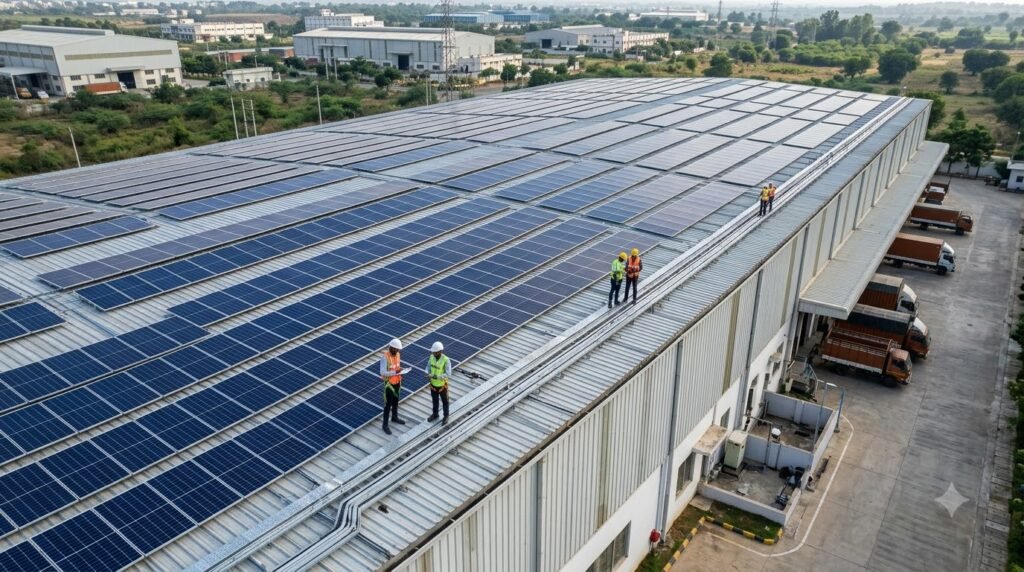
Manufacturing plants, warehouses, cold storage facilities, IT parks, retail showrooms, hotels, and educational institutions are among the businesses seeing the fastest returns from solar adoption, thanks to their high daytime energy consumption patterns. Businesses that operate energy-intensive equipment — such as refrigeration units, HVAC systems, or production machinery — during daylight hours tend to see the most direct alignment between solar generation and actual usage, maximizing self-consumption of the power produced.
Understanding Commercial System Sizing
Sizing a commercial solar panel system is more complex than a residential one. It requires a detailed understanding of your facility’s load profile — how much energy you consume, at what times of day, and how consistently. Businesses with steady daytime consumption typically see better returns than those with highly variable or nighttime-heavy usage. A proper energy audit, reviewing months of utility bills alongside equipment specifications, forms the foundation of an accurately sized system.
How to Plan a Commercial Solar Panel System With RVK Solar
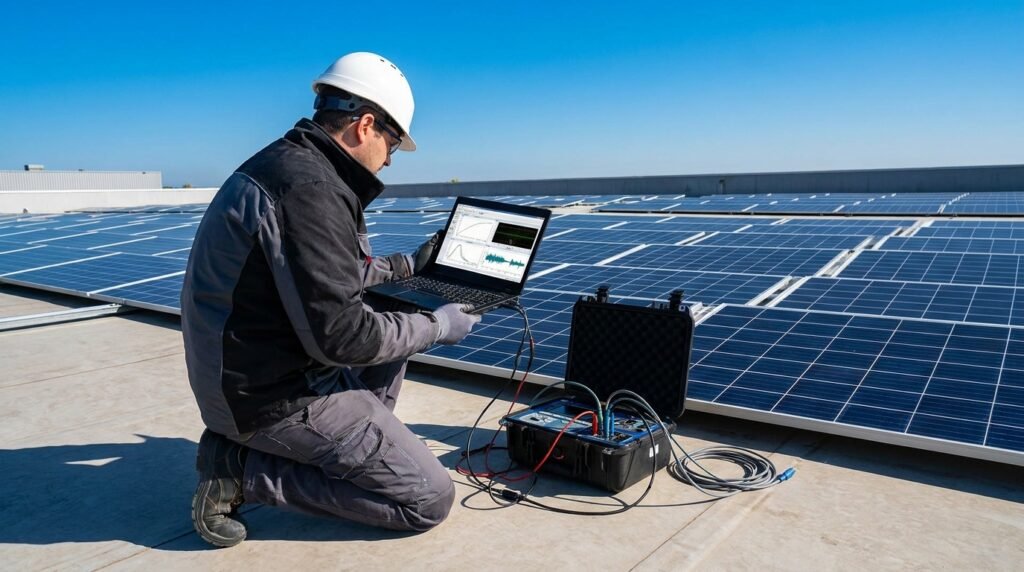
- Site & Load Assessment – We study your facility’s energy consumption patterns and available rooftop or ground space to determine feasible system capacity.
- Engineering & Design – Systems are custom-engineered to match your business’s peak load requirements, structural capacity, and future growth plans.
- Financial Planning – We help you understand projected savings, payback period, and any applicable incentives before you commit.
- Execution & Compliance – Installation is carried out with strict attention to safety standards and regulatory approvals, minimizing disruption to daily operations.
- Performance Monitoring – Post-installation, we track system output to ensure it consistently meets projected energy generation, flagging any underperformance early.
- Preventive Maintenance – Scheduled servicing keeps components running efficiently and extends the operational life of the system.
Financing and Incentives to Consider
Commercial solar projects often qualify for financial support that residential systems don’t, including accelerated depreciation benefits under Section 32 of the Income Tax Act, government subsidies for renewable adoption, and in some cases, financing structures that spread the upfront cost over time while savings begin immediately. You can check current renewable energy policies and updates on the Ministry of New and Renewable Energy’s official website. Discussing these options during your consultation can significantly change the overall economics of your project.
The RVK Solar Advantage for Businesses
Commercial solar isn’t a one-size-fits-all product — it demands precise engineering and a team that understands industrial-scale energy needs. RVK Solar brings that expertise, using high-efficiency components and a dedicated maintenance program to keep your commercial solar panel system performing at its best for decades, so your business keeps saving long after installation day. Our team works closely with facility managers and business owners to ensure installation timelines respect operational continuity, and our monitoring systems give you full visibility into how much your solar investment is actually saving.
FAQs:
1. What size of commercial solar panel system does my business need?
System size depends on your facility’s average and peak energy consumption, available installation space, and budget — our team calculates this during the site assessment.
2. How long does a commercial solar installation take to pay for itself?
Payback periods vary by system size and energy usage, but many commercial installations recover their cost within a few years through reduced electricity bills.
3. Will solar installation disrupt our daily business operations?
Installation is planned to minimize disruption, and in most cases, business operations continue as usual throughout the process.
4. Can a commercial solar panel system be scaled up later?
Yes, systems can often be designed with future expansion in mind, allowing you to add capacity as your business energy needs grow.
5. Are there financial incentives for businesses installing solar?
Many regions offer subsidies, tax benefits, or depreciation advantages for commercial solar installations, which can significantly improve overall ROI.