Commercial Solar Panel Installation: A Practical Guide for Business Owners
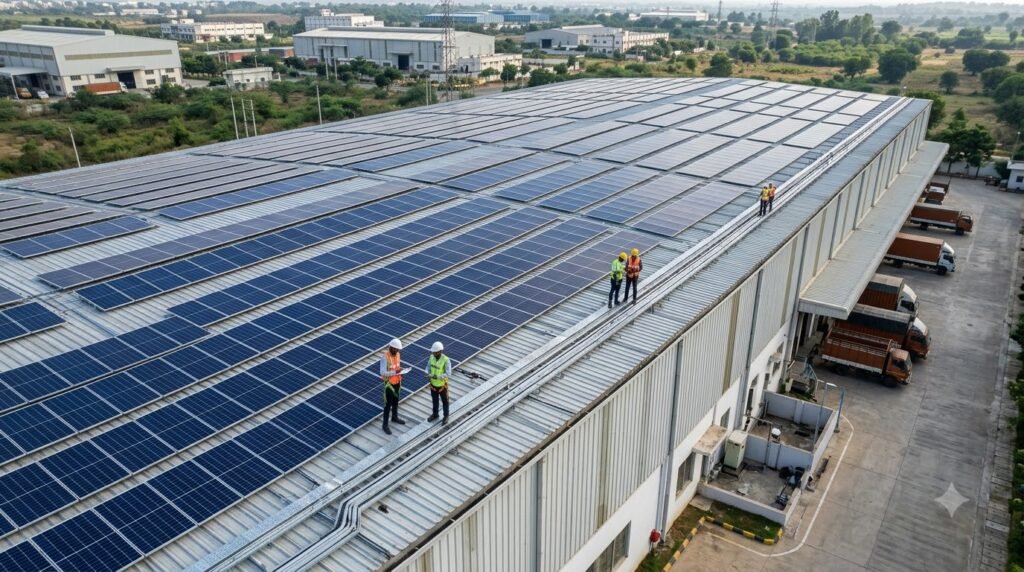
Commercial solar panel installation is one of the most direct ways a business can bring down its power costs and gain control over a major monthly expense. Factories, warehouses, schools, hospitals, hotels and offices all run during the day, which is exactly when solar panels produce the most energy. Instead of buying every unit from the grid at commercial tariffs, you generate a large part of your own electricity from space that is already sitting idle on your roof.
This guide from RVK Solar walks through what commercial solar panel installation involves, who benefits most, the stages of a typical project, what drives the cost, and how to judge the return before you commit.
What Commercial Solar Panel Installation Actually Involves
A commercial solar plant is a larger, more engineered version of a home system. It includes solar modules, one or more inverters, mounting structures, DC and AC cabling, protection devices, earthing, lightning arresters, a monitoring system and the connection to your main electrical panel and utility meter. Capacity usually starts from a few tens of kW and can run into hundreds of kW or more.
The aim of commercial solar panel installation is not simply to fill the roof with panels. It is to match generation to your load profile, so that most of the power is consumed on site while the plant is producing, and any surplus is handled through the utility arrangement available in your state.
Who Gains the Most from Going Solar
Businesses with high daytime electricity use see the strongest results. Typical examples include:
- Manufacturing units and MSME workshops running machines through the day
- Cold storage, warehouses and logistics hubs with large flat roofs
- Hospitals, hotels and resorts with continuous cooling and heating loads
- Schools, colleges and training institutes
- Offices, malls and commercial complexes with heavy air-conditioning demand
If your monthly bill is large and your operations are concentrated between morning and evening, commercial solar panel installation is likely to deserve a serious look.
Cost Drivers and the ROI Math
There is no single price for commercial solar panel installation, because projects differ in size, roof condition, equipment grade and utility rules. The factors that move the budget most are:
| Cost Factor | Why It Matters |
|---|
| Plant capacity | Larger plants usually cost less per kW |
| Module and inverter quality | Better equipment costs more upfront but lasts and performs better |
| Roof type and structure | Metal sheds, RCC roofs and ground sites need different mounting work |
| Cable length and electrical upgrades | Distance to your panel and any required upgrades add to cost |
| Approvals and metering | Charges and timelines depend on the DISCOM |
| Ownership model | Buying the plant outright, or paying for power under a service model, changes the cash flow |
To estimate returns, compare your current cost per unit with the expected solar cost per unit over the plant’s life. Many businesses find that payback falls in the range of three to five years, depending on tariff, usage pattern and project cost, and that the plant keeps generating for 25 years or more with proper care. Because commercial tariffs are often higher than residential ones, the savings per unit can be substantial.
Two points deserve honesty. First, the PM Surya Ghar subsidy applies to residential connections, so commercial and industrial consumers should not plan their budget around it. Second, tax benefits such as depreciation provisions can influence the real return, but they depend on current law and your own tax position, so confirm them with your chartered accountant before finalising the numbers.
Rooftop, Ground-Mount or Carport: Choosing the Layout
- Rooftop: The most common choice for commercial solar panel installation, since it uses existing space and keeps cables short. It needs a structurally sound roof.
- Ground-mount: Suits businesses with open land, offering easier cleaning and flexible tilt, though it needs more area and civil work.
- Solar carport: Panels double as shade for vehicles, which suits offices, hospitals and malls with large parking areas.
The right layout depends on your site, budget and long-term plans, and a survey will usually make the answer obvious.
Compliance, Net Metering and Paperwork
Every plant must follow electrical safety norms and utility connection rules. Equipment should meet recognised standards, and the connection has to be approved before it feeds power into the network. The Central Electricity Authority publishes technical and safety regulations for grid-connected systems, and the Ministry of New and Renewable Energy is the place to follow national solar policy. For standards on equipment quality, the Bureau of Indian Standards is a useful reference. Net-metering limits, banking of units and charges differ from state to state, so your installer should confirm the local position in writing.
Keeping Output High: Operations and Maintenance
A commercial plant is a business asset and should be treated like one. Good operations and maintenance include:
- Scheduled panel cleaning, more often in dusty or industrial areas
- Thermography and visual checks for loose connections and hotspots
- Inverter servicing and firmware updates
- Checks on structure, fasteners and roof sealing, especially after heavy monsoons
- Monthly generation reports compared against the expected performance
For a deeper look at how solar technology is evolving worldwide, the International Energy Agency’s solar PV overview is a reliable read.
What Sets RVK Solar Apart
RVK Solar delivers solar energy solutions for residential, commercial and industrial customers, covering consultation, system design, installation and ongoing maintenance under one roof. For a business owner, that means one team accountable from the first energy audit to long-term service.
- Design around your load: The plant is sized for your actual consumption and working hours.
- Transparent proposals: Equipment lists, assumptions and expected generation are put on paper.
- Clean execution: Safe installation practices that protect your roof and operations.
- Support after commissioning: Maintenance help so the plant does not drift below its potential.
Read more about the team on the about page or explore the full set of solar services.
Request a Site Assessment
If you are ready to explore commercial solar panel installation for your premises, start with a site assessment. Share your recent electricity bills and roof details, and the RVK Solar team will recommend a capacity, outline the costs and show the savings you can expect. Get in touch with RVK Solar to schedule your visit.
Switch Your Workplace to Solar
Ready to plan commercial solar panel installation for your factory, warehouse, shop or office? Contact RVK Solar at H.no.1, Semar Wali Gali, Mill Road, Ganj Basoda, Dist: Vidisha (M.P.) – 464221, and get an energy audit, a plant sized to your daytime load and a clear ROI estimate before you commit.
or reach out via our Contact Us page for a site assessment.
Call us: +91 98273 73375 | Email: rvksolar@gmail.com
FAQs:
1. How long does commercial solar panel installation take?
Physical installation of a small to mid-sized plant often takes a few weeks, but the full timeline depends on approvals, equipment delivery and utility inspection, which can take longer than the installation itself.
2. What size of plant does my business need?
It depends on your daytime consumption, sanctioned load and available shadow-free area. An energy audit of your last twelve bills is the starting point for an accurate answer.
3. Can I run my business entirely on solar?
Not usually with an on-grid plant. Solar covers a large share of your daytime use, while the grid supplies the rest, including night-time demand. Batteries can extend this, but they add significant cost.
4. Is my roof strong enough for solar panels?
Most RCC roofs and many metal sheds can carry solar, but a structural check is essential. Older or weakened roofs may need reinforcement or a different mounting approach.
5. Will the PM Surya Ghar subsidy apply to my factory or shop?
No. That subsidy is for grid-connected systems on residential connections. Businesses should evaluate returns on their own tariff savings and any applicable tax provisions.